Showing posts with label references. Show all posts

Thursday, April 11, 2013

Stickleback: Number of the Beast Part Three References

Something's brewing down in the depths
Stickleback Number of the Beast copyright Rebellion Developments Ltd/2000AD.
Stickleback Number of the Beast created by Ian Edginton and Me

Page 1


 Panel 2: “My five days” 

Stickleback has an arrangement with the White Lotus Empress that he can visit his son on one day each year - he’s lost five years to his regeneration, hence he feels he’s owed five days.


Page 4


Panel 1: Lots of stuff here:


Wold-Newton Tours

In the fictional biographies Tarzan Alive (1972) and Doc Savage: His Apocalyptic Life (1973), writer Philip José Farmer introduced the Wold-Newton family tree, a genealogy that bound together all of the best-known characters from the pulp and speculative fiction of the late 19th and early 20th Century. The idea was that the bunch of extraordinary individuals all sprang from common ancestors who were affected by radiation from a meteorite during a coach tour to the village of Wold Newton in Yorkshire. The notion of characters from one fictional world “crossing over” into another was not new - it had occurred in pulp fiction and was commonplace if the world of comics - but was usually limited to characters owned by a single publishing house. Farmer not only cast his net wide across the popular fiction of a whole era, but he worked out complex rationalisations to allow these sometimes-conflicting continuities to exist all in the same world. Farmer himself produced only a few novels depending on the Wold-Newton continuity, the most notable being his insanely pornographic “Doc Savage meets Tarzan” novel A Feast Unknown. In the UK, writer Kim Newman took up the baton with his novel Anno Dracula and its sequels, and in this century writer Alan Moore and artist Kev O’Neill brought the genre back to comics with the League of Extraodinary Gentlemen. Ian and I are manfully following in all these fine gentlemens’ footsteps.


The Lord Talbot

A tribute to writer/artist Bryan Talbot, whose The Adventures of Luther Arkwright (1980-84) lays claim to being the first British graphic novel, and also possibly the first example in comics of the genre that would become known as steampunk.
Bryan also drew the bulk of the first-ever steampunk story in 2000AD, Nemesis the Warlock Book IV: The Gothic Empire (1984, written by Pat Mills, first episode drawn by Kevin O'Neill.)


Adam Ant and Adam Adamant

1980’s pop idol Adam Ant as The Dandy Highwayman*, walking alliteratively beside Adam Adamant, the swashbuckling Victorian adventurer played by Gerald Harper in the 1966 BBC TV series Adam Adamant Lives! Presumably this encounter occurs before Adamant’s nasty hibernation accident.

*Initially I was going to miss this one out, as for some reason I felt too scared to mention him.


Trotter’s Independent Trading

Run by the forebears of Del-boy and Rodney from the popular BBC TV sitcom Only Fools and Horses (1981-91). Items on the stall (including a chandelier and a Batman mask) refer to famous incidents from the series.


Kim Newman with Kate Reid and Genevieve Dieudone

Writer Kim Newman, whose ingenious re-combinings of characters and setting from popular culture have provided inspiration for both Stickleback and Scarlet Traces, promenades with two of his most famous female characters.


Eckert’s Alternatives

Over the years I've slipped in various references to odd or fictional comestibles into my strips; fishpaste is the obvious one, also Zopto-Bemsol ("Effulgent and Prim!") and Mongue ("You know it's wrong!"). Eckert's Alternatives ("Good for a change!") are Ian's contribution to this noble tradition, his first since Captain MacLean's Old Rot Gut made its debut in Leviathan ten years ago.


Page 5


Panel 2: The Vaults (Piranesi)

The underground vaults in which the Sorrys lurk are directly inspired by the Carceri d'invenzione ('Imaginary Prisons’) of artist Giovanni Battista Piranesi (1720-1778). This series of 16 prints, first published in 1750, consist of black & white etchings of vast, vaulted underground spaces, and have been claimed as an influence by both the Romantics and the Surrealists. Given how wonderful the Carceri are, it surprises me to note that I haven’t ripped them off more often ; the last time was when completing the final section of Scarlet Traces back in 2002.

Saturday, March 23, 2013

Stickleback Number of the Beast Part 1 References


Stickleback: Number of The Beast Part One
Stickleback Number of the Beast copyright Rebellion Developments Ltd/2000AD.
Stickleback created by Ian Edginton and Me
WARNING: THESE SPOILERS MAY CONTAIN SPOILERS

To minimise spoilificatiousness, I've left these nearly a week from delivery of subscription copies. Since subscribers will already have part 2 by the time I post this, It's time to get going.

Page 1


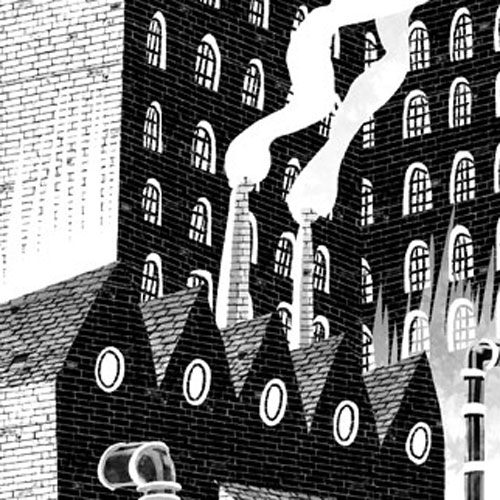
Panel 1: Dark Satanic Mills

Based loosely on the landscape of Bradford in my native Yorkshire.


Panel 3: Sentinel Steam Lorry
The sentinel was a real steam powered lorry produced by the Sentinel Waggon Works from 1906 till as late as 1950.


Page 5

Panels 1 & 2: Talos and the Harpies

The severed head of the giant ambulatory statue Talos and several stuffed harpies from the 1963 Charles Schneer-Ray Harryhausen film Jason and the Argonauts.


Panel 3: Gorgo

The “British Godzilla,” from the 1961 film of the same name. Gorgo was the second of three monster films directed by Eugène Lourié. The first, The Beast from 20,000 Fathoms, kickstarted the career of animator and effects wizard Ray Harryhausen, as well as inadvertantly spawning the whole Japanese Kaiju genre when Toho made Godzilla (Gojira) in 1954 to cash in on the terrific success of The Beast in Japan. Ironically, Lourié ended up adapting the Kaiju “rubber-suit-mation” technique to create the monsters in Gorgo. His third monster film, The Giant Behemoth, brought him together with veteran effects animator Willis O’Brien, the man behind Hollywood classic King Kong, and mentor to the young Ray Harryhausen.
Gorgo enjoyed considerably longer life in comics than in movies, enjoying a 23-issue run in his own title published by Charlton Comics. The comic featured early work by Steve Ditko.


Panel 3: Skeleton of Konga

The “British King Kong,” from the 1961 film Konga, about a gorilla who accidentally drinks super growth serum and ends up ambling amiably around London while sqauds of hysterical Tommies shoot at him for being out of scale (still a capital offence in the 1960’s). Konga is also notable as the film in which veteran British actor Michael Gough (later to play Alfred the butler in the Tim Burton Batman movies) succeeded in the delivering the line, “if I hadn’t shot her, pussy would have started to swell uncontrollably,” with a straight face. Charlton Comics adaptation of Konga is notable as the first published professional work of Steve Ditko, who went on to co-create The Amazing Spiderman.

Panel 3: The Cavorite Sphere
Professor Cavor’s anti-gravity space vessel from HG Well’s novel The First men in the Moon, also filmed by Schneer & Harryhausen in 1964.


Panel 3: Time machines

From left to right, on the balcony rail:

HG Sewell’s pocket-watch shaped time machine from Ian Edginton’s and my Tempus Fugitive stories in Judge Dredd (2004-2007). Sewell himself has made brief cameos in Stickleback as an inmate of Bedlam.


The elaborate glass lens design from Simon Wells' 2002 version of The Time Machine, starring Guy Pierce.


The classic George Pal model from his classic 1960 version, starring Rod Taylor.


The time machine ridden by Malcom McDowell as HG Wells in pursuit of Jack the Ripper in the Nicholas Meyer's 1979 film Time After Time.


Panel 3: Kali
The animated sword-fighting statue from Schneer & Harryhausen’s The Golden Voyage of Sinbad (1973)


Panel 4: Insect monsters

An ant-like Zarbi and moth-like Menoptera from the Willam Hartnell-era Doctor Who story, The Web Planet (1965)


An adult Wirrn from the Tom Baker-era Doctor Who story, The Ark in Space (1974). Not shown here, Wirrn larvae were huge featureless maggot things made by wrapping an unfortunate BBC extra from head to foot in bubble wrap.


A giant maggot from the John Pertwee-era Doctor Who story The Green Death (1973).


(Shown in framed photograph) Mosura (Mothra), the giant moth guardian of Infant Island, from the Toho film of the same name (1961). The most popular Kaiju after Godzilla, Mothra was the first Toho monster to cross over with the Big G in Godzilla vs. Mothra (1964). She appeared in 14 Godzilla fims in all three series, and is the only Toho monster to spin back off into a solo series (The Rebirth of Mothra, 3 films 1997-9). Although, in the original film Mosura, the meddling Western power is coyly renamed "Rosilica," the film still exhibits an rather startlingly overt anti-Amercianism, making it one of the more interesting ones of its type.


Panel 4: The Peanuts

The two tiny figures in the glass case panel left are the telepathic twins who mediate intercede with Mothra on behalf of the world, variously called “The Fairies” or “The Cosmos” in different versions. In the earlier films, they were played by twin sisters Emi and Yumi Ito, who performed on stage as “The Peanuts.” The jar of peanuts on the case above them is a reference to this.


Panel 5: The Prague Orloj

The timer for Stickleback’s regeneration machinery is a copy of the famous multi-faced astronomical clock that stands in the old town square in Prague. It's the third oldest astronomical clock in the world, and the oldest still working.


Page 7

Panel 2: Surrounding Stickleback in this panel are; a Lament Configuration box from Clive Barker’s Hellraiser; the box, the musical box (wound up and ready to play) from the opening titles of 1960’s childrens’s stop-motion puppet series Camberwick Green; Malvoisin’s Mirror, from the strip of the same name written by Chris Lowder and drawn by the excellent Brian Lewis for House of Hammer #6; and on the bottom right, the fully assembled Key to Time from Doctor Who season 16 (1978-9).

On re-reading the script for this post, I discover I was also supposed to put in the Maltese Falcon, but I forgot. Oopsie.

Panel 6: Frankenstein’s Apparatus
The equipment shown in flashback behind Orlando Doyle is all apparatus from Frankenstein’s laboratory in the classic 1931 James Whale/Boris Karloff version. Designed by Kenneth Strickfaden, this gear was still showing up in horror films as late as the 1970’s.


Page 8

Panel 5: The Judas Silver

Previously mentioned in Stickleback: England’s Glory, Judas Iscariot’s 30 pieces of silver have been paid by Stickleback to Orlando Doyle in return for future favours. Stickleback’s resurrection clears the debt.


Page 10:

The Construction Robots

The skeletal construction robots with their scaffolding-like limbs are a tip of the hat to Kev O’Neill’s classic Trebuchet robot from Nemesis the Warlock Book III.


Dray Brontosaurus
Stickleback is set in an unspecified late-Victorian era, so there’s none of this Apatosaurus business yet. We’ll find out why there are dinosaurs in the streets of London next Prog.


The Monkey’s Uncle

A reference to the controversy surrounding the theory of natural selection proposed by Alfred Russel Wallace and Charles Darwin (who appears on the pub sign, lampooned as an ape.)


The London Overground
The notion of the overhead monorail as a symbol of futurity goes back many years; real examples have been built, most famously in the Disneyland and Disney World amusement parks in the US. The overhead design here is loosely based on the Wuppertal Schwebebahn, opened in Germany in 1901 and still in service, though I’ve simplified the overhead support considerably. The name London Overground is a recycling from Ian Edginton’s and my graphic novel Scarlet Traces (Judge Dredd Megazine 2002-3/Dark Horse 2003)


The Steam Man of the Prairies
Written by Edward Ellis in 1868, The Steam Man of the Prairies is considered the first US science-fiction "dime novel." It's the story of Johnny Brainerd, a teenage dwarf who build a non-sentient steam-powered automaton capable of pulling a carriage at speed. Despite the somewhat bizarre premise, the story was enormously popular, seeing reprint 6 times between 1868 and 1904, and spawning many imitators, including the long running Frank Reade boys' adventure series. It's one of the earliest examples of the invention-based genre known as the "Edisonade."


“Sorry’s”

These evolved dinosaurs were inspired by Professor Dale Russel’s famous (and controversial) dinosauroid thought experiment - an attempt to map where dinosaur evolution would have led if they had not become extinct. His own proposal was for a strongly anthropomorphic intelligent dinosaur, though our version follows later thinking that posits creatures that are more theropod-like. Just why the streets of London are alive with these little critters will be revealed next Prog, so I’ll say no more.

Monday, March 01, 2010

Stickleback: London's Burning Part Ten References

Page One: Sanderson's Department Store and The Burleigh Theatre

Both major landmarks of "Everytown," the fictional city seen bombed to ruins in an air raid in William Cameron Menzies' 1936 film Things To Come, which was based on H.G. Wells' 1933 novel The Shape Of Things To Come.

The air raid scene is compellingly realistic, which is all the more impressive because the first saturation bombing of civilians from the air did not occur until a year later in 1937, during the Spanish Civil War, when the Basque town of Guernica was bombed by the German Luftwaffe and Italian Fascist Aviazione Legionaria on behalf of the forces of Generalísimo Francisco Franco .


Page One: "War Tubas"

These strange-looking devices (which can also be seen attached to the telescope on page one of this episode) are based on now-obsolete but nevertheless real devices called acoustic detectors, essentially giant ear trumpets which were designed to give advance warning of hostile aircraft in the years before radar was invented.


Page Three: Gatling Guns

Invented in 1861 by Dr. Richard J. Gatling, the Gatling Gun is probably the most famous precursor of the modern machine gun, and is instantly recognizable by its characteristic rotating cylindrical barrel.

The ones on the Mistral are very large scale, firing small-bore artillery shells instead of bullets.

Stickleback: London's Burning Part Nine References

Page One : The Mistral's Engine Room

Inspired by childhood visits to the two-storey River Don Engine at Kelham Island Industrial Museum in my native Sheffield.


Page Two: Maintenance Robots

Hands up; we're riffing on the spider-style machines from Scarlet Traces with some of this stuff.


Page Three: Sic Transit Gloria Swanson

Ian's instructions regarding the Countess's body language in this sequence was "I see her as going a bit Gloria Swanson, all silent movie arm movements and the like!" It made sense to make her body language big and bold, in the style of the more expressive silent film actors, since her masked face couldn't show expression.

Stickleback: London's Burning Part Eight References

Page Two: Breeches Buoy

Potts's emergency device is based on an old piece of marine rescue kit called a breeches buoy. The device was essentially a pair of trousers stitched into a lifesaver, with ropes running up to a pulley. It was used to extract personnel from ships wrecked near shore by allowing them to be hauled over the water using a line fired from a short-barrelled cannon called a Lyle Gun.


Page Three: The Mimsie Ascends

When I drew this I had in mind the magnificent night-time above-the-clouds scenes from Hiyao Myazaki's 1986 animated film Tenkû no shiro Rapyuta (Laputa the Flying Island/Castle in the Clouds).


Page Four: Black Bob's Arms

I case you've forgotten, Black Bob's arms were both severed in combat with the false Buffalo Bill during the last episode of Stickleback: England's Glory, and we saw Miss Scarlet stitching them back on in the final page of that episode.

Stickleback: London's Burning Part Seven References

Page One: Stickleback's London

This view is accurate in terms of the locations of landmarks and the positioning of the river bends in perspective; however, at the altitude necessary to take in this sweeping view, the individual landmarks would be vanishingly small, so I bumped their sizes up by a factor of five or so to make them visible.

As well as real landmarks such as Hyde Park, Buckingham Palace, Trafalgare Square, The Houses of Parliament, The Tower of London and Tower Bridge, we included the following planned or imaginary buildings:

1) The London Eye - a giant Victorian Ferris wheel, placed, like its 21st Century counterpart, opposite the palace of Westminster.

2) The Crystal Palace - here still occupying its original site in Hyde Park.

3) William Thomas's proposed giant pyramidal cemetery - designed to hold up to five million dead Londoners!

4) The proposed mausoleum for Sir Isaac Newton (the smaller pyramid with the sphere on top). We used this building as the new Greenwich Observatory (where Spry's office was located) in Scarlet Traces, but here it's been moved off Greenwich hill, to make way for:

5) John Flaxman's 200-foot-high statue of Britannia, proposed circa 1800 but never built.


Page One: The Mimsie

Though balloons using actual boats as gondolas is a common steampunk trope, the design of the Mimsie is meant to echo certain characteristics of that fine four-fendered friend, Chitty-Chitty Bang-Bang, for reasons that will become apparent in the next item.

Personally, I couldn't help but think of Noah and Nelly.


Page Two: Potts

Inspired by the inventor hero of Ian Fleming's 1964 novel (and subsequently 1968 film) Chitty-chitty Bang-bang. Our Potts has been having a hard time of it, and is indebted to Stickleback to boot.

Friday, February 26, 2010

Stickleback: London's Burning Part 6 References

(Sorry for the delay in posting these references - I've been caught up with finishing the last episode of Stickleback: London's Burning. Will try to catch up on the posts ASAP)

Page One: Bedlam

In Stickleback's world, the secret HQ of the British Secret Service. See the references for Stickleback: England's Glory Part 2 for a history of the Bethlem Royal Hospital.


Page One: Herbert George Sewell

The time traveller created by Ian Edginton and myself for a series of Judge Dredd stories. In Stickleback: England's Glory we saw him being dragged into Bedlam; here he's cutting his way out, but a pair of wily warders have their eye on him.


Page One: Ashenden's Office

As it appeared in Stickleback: England's Glory. The large mirror behind the desk is one way, and allows the head of the secret service to monitor events within.


Page One: Mister Scudder

Successor to the unfortunate Ashenden, who was peeled alive by the false Buffalo Bill at the end of Stickleback: England's Glory. Scudder's appearance was inspired by the veteran British actor Sir John Mills.


Page Three: The Man in the Chair

The image of the hidden villain, identity hidden by a high-backed chair, is one taken from the way the character Ernst Stavro Blofeld was introduced in the 1960's James Bond films. Our man lacks the signature white persian cat, though.


Page Four: The Arnolfini Portrait

The composition of this panel is borrowed for Jan Van Eyck's 1434 painting known as The Arnolfini Portrait (sometimes The Arnolfini Wedding). It's particularly striking since the "bride" appears to be heavily pregnant.
Our version features two of the earliest figures in computing, Charles Babbage and Ada Lovelace.

Charles Babbage (1791-1871) was a mathematician and mechanical engineer who came up with the idea of the programmable computer. He designed a wholly-mechanical calculating device, the Difference Engine, which was capable of returning results to 31 decimal places. Though it was never completed during his lifetime, a Difference Engine built in 1991 did indeed work successfully.
Augusta Ada King, Countess of Lovelace ("Ada Lovelace" 1815-1852) was the only legitimate child of Lord Byron, and a mathematician who took an interest in Babbage's Difference Engine. He notes on the subject include what is recognized as the first algorithm designed to be processed by a machine. Thus she is often regarded as the world's first computer programmer.


Page Four: The Arnolfini Dog

Drawn pretty much as it appears in the original painting. Given the near-photographic accuracy of the rest of the painting, this clumsily-drawn dog seems like a bit of an anomaly. Either Van Eyck was no good at dogs, or possibly the fluffy little bastard wouldn't keep still.


Page Four: Count Bernoulli

The name is a reference to Dutch-Swiss mathematician Daniel Bernoulli, who is best known for his work in fluid mechanics and his pioneering work on probability and statistics. Bernoulli's theorem (put simplistically as "moving air has less pressure") explains, among other things, how spray guns work and how aircraft wings generate lift.

The character of Count Bernoulli, as shown here, was inspired by actor Ferdy Mayne, who is probably best remembered for the role of Count von Krolock in Roman Polanski's 1967 film The Fearless Vampire Killers.


Venice

In the script, no location is specified for this portrait of the young Countess - but since she was meant to be in Italy, I thought where better than Venice, home town of that most romantic of Italian comic characters, Hugo Pratt's Corto Maltese?


The Veil

This particular way of drawing a veiled face (using blocks of shading to hint at the features beneath the veil without showing them) is borrowed from Marc Hempel's drawings of the Gorgon women from Sandman: The Kindly Ones - which I had the pleasure of inking back in 1994.